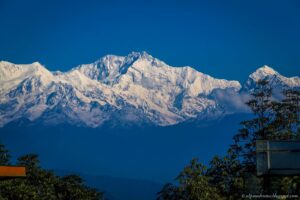

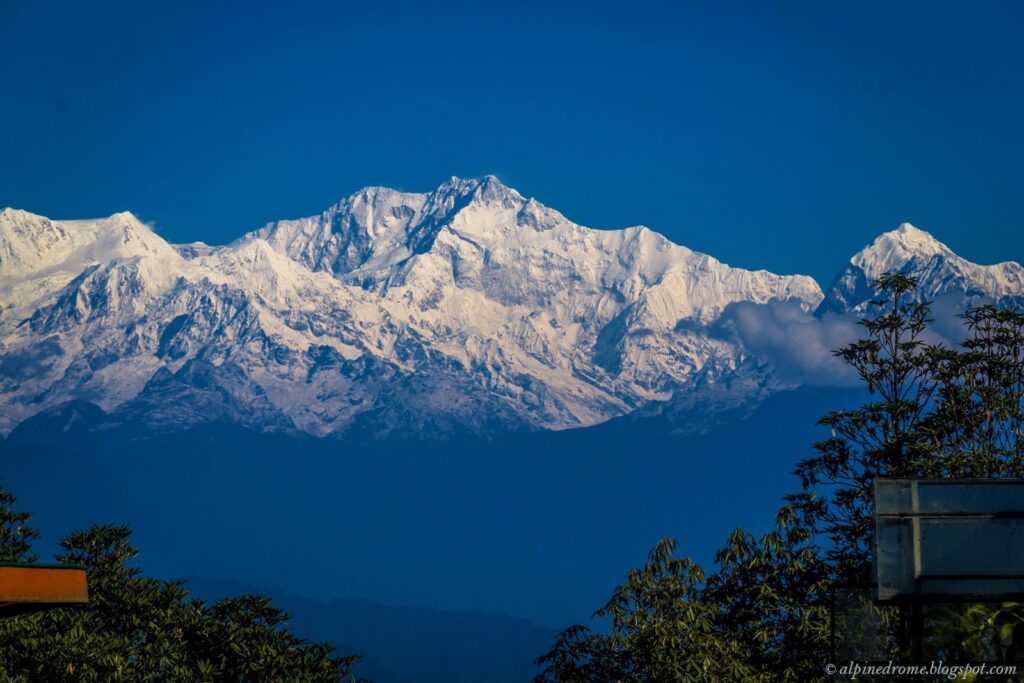
Kangchenjunga, the third-highest mountain in the world at 8,586 meters (28,169 feet), towers over the eastern Himalayas like a sentinel between earth and sky. Straddling the border between Nepal and the Indian state of Sikkim, it remains one of the least-climbed and most revered peaks on Earth—shielded by treacherous terrain and an unspoken pact of respect for its sacred nature.
But beyond its snowbound ridges and knife-edged summits lies a question that has stirred both explorers and spiritual seekers for centuries: could there be a diamond—or some other fabled treasure—hidden deep within Kangchenjunga’s icy heart?
Legends speak of The Five Treasures of the Great Snow—gold, silver, gems, sacred texts, and grain—bestowed by divine hands to aid humanity in times of crisis. Among these treasures, some stories whisper of an unmatched gemstone, radiant as the morning star, sealed away beyond mortal reach. While geology offers no evidence of such a diamond in these young, shifting mountains, the myths endure, entwining faith, folklore, and the irresistible lure of the unknown.
Today, Kangchenjunga’s mystery remains unsolved—not only in the physical sense, but in the spiritual depths it represents. For the people who live in its shadow, its treasures may not be metal or stone at all, but wisdom, protection, and a reminder that some wonders are meant to be sought, but never taken.
For the Lepcha people—the original inhabitants of Sikkim—Kangchenjunga is not merely a mountain; it is their guardian spirit. They believe they were created in its foothills and that their souls return to it after death. The mountain is also sacred to the Bhutia people, who follow Tibetan Buddhism. In their tradition, Kangchenjunga is home to Dzo-nga, the mountain deity who safeguards the land from harm. Offerings and prayers are made to him during festivals, asking for protection, good harvests, and balance in the natural world.
Even today, mountaineers approaching Kangchenjunga stop a few meters short of the true summit. This is not due to lack of skill, but out of deep cultural respect—a rare tradition in the climbing world. To stand on the very crown of Kangchenjunga is seen as an intrusion into sacred space, a trespass against the gods.
The name Kangchenjunga is rooted in Tibetan:
Kang – snow
Chen – big
Dzö – treasure
Nga – five
It translates to “The Five Treasures of the Great Snow.” According to local legend, these treasures—gold, silver, gems, sacred texts, and grain—were hidden in the mountain by divine beings to aid humanity in times of catastrophe. Some interpretations see them as literal treasures locked within ice caves; others view them as spiritual gifts—symbols of compassion, wisdom, prosperity, and sacred knowledge.
In Buddhist cosmology, Kangchenjunga is also linked to the prophecy of Beyul—hidden lands of peace and abundance, protected by the mountains until humanity is ready. Monks say the mountain guards such a sanctuary, revealed only to the pure of heart. This belief has fueled centuries of pilgrimage, even among those who never hope to see its hidden valleys
Among the most enduring legends tied to Kangchenjunga is that of Beyul Demoshong, a mythical hidden valley described in Tibetan Buddhist scriptures as a paradise on earth, accessible only to the pure-hearted. The word beyul refers to a “hidden land” — a secret sanctuary prepared by enlightened masters to protect the Dharma in times of chaos.
The origins of the beyul prophecy trace back to the 8th-century Buddhist master Guru Padmasambhava (also known as Guru Rinpoche), who journeyed across the Himalayas establishing sacred sites. According to legend, he blessed certain valleys — including the slopes of Kangchenjunga — to remain concealed until humanity faced great moral and environmental crisis. Only then would their gates open to those of compassion, wisdom, and pure intent.
In The Hidden Teachings of Tibet, Tarthang Tulku describes beyuls as “portals between worlds… places where the ordinary dissolves into the sacred.” Demoshong, in particular, is said to contain lush meadows, crystal lakes, and temples untouched by time — guarded by mystical beings and concealed by ever-shifting mists.
The story captured the imagination of early explorers. In the early 20th century, British officer Frederick Marshman Bailey recorded accounts from locals in Sikkim and Tibet who spoke of “a valley so green and fertile that no hunger could touch it, hidden beyond a wall of snow no man could cross.” These oral histories told of sacred relics, gemstones, and scriptures stored there, awaiting the day they would aid the faithful.
Geographically, Beyul Demoshong is believed to lie on the eastern flank of Kangchenjunga, near routes leading toward the Zemu Glacier and the remote highlands of North Sikkim. While no verified expedition has confirmed its existence, stories persist among the Lepcha and Bhutia people, who regard it as a living promise rather than a mere legend.
Even in modern times, trekkers speak of uncanny moments in the region — sudden breaks in cloud revealing valleys that seem impossibly green, the sound of temple bells where no monastery stands, or the sense of being watched by something benevolent yet unseen. Local guides often caution visitors to “walk with a clean heart,” echoing the old belief that the path to a beyul will close to those who carry greed, anger, or ill intent.
In this way, the legend of Beyul Demoshong continues to bridge myth, spirituality, and adventure, making Kangchenjunga not only a mountain to climb but a mystery to contemplate.
By the late 19th century, Kangchenjunga had already entered the maps and imaginations of British explorers, surveyors, and political officers stationed in Sikkim and the eastern Himalayas. Yet, long before these foreign expeditions, Tibetan and Sikkimese oral traditions, passed down through generations, speak of Kangchenjunga’s sacred power—rituals led by Lepcha shamans affirm the mountain’s role as protector.
John Claude White, a British political officer in Sikkim from 1889 to 1908, documented in Sikkim and Bhutan: Twenty-One Years on the North-East Frontier that local chieftains and lamas spoke with quiet conviction about treasures sealed within the mountain. Some claimed these were offerings made to the mountain deity, Dzo-nga generations ago to ensure the land’s protection. Others insisted they were the terma — hidden teachings and objects concealed by Guru Padmasambhava to be revealed only to destined seekers.
The political tensions of the time gave these legends a peculiar weight. The British Empire’s interest in the Himalayan frontiers was not purely strategic; it was also driven by curiosity for the region’s spiritual geography. Reports filtered back to Calcutta and London of “great riches buried in the shadow of Kangchenjunga, guarded by ice and the old gods.”
Tibetan accounts, often shared reluctantly with outsiders, spoke of golden chortens, ancient manuscripts, and relics of past Buddhas hidden in high caves accessible only when the mountain itself “permits passage.” The British fascination with these tales was amplified by explorers like Frederick Marshman Bailey, who recounted hearing that such treasures were part of a pact between local rulers and divine forces — a pact never meant to be broken by foreign hands.
Still, despite numerous mapping surveys and reconnaissance missions in the region, no verifiable expedition ever unearthed these supposed treasures. This absence of proof only deepened the mystery. As White himself remarked, “The stories are told without exaggeration, as if their truth is not in question but their discovery is… deferred.”
Today, historians debate whether these accounts reflected a literal belief in material riches or a symbolic reverence for Kangchenjunga as a spiritual treasury — a storehouse of merit, wisdom, and blessings for the land and its people. In either case, the mountain’s reputation as a guardian of hidden wealth remains one of its most enduring legends.
Legends of Kangchenjunga’s Five Treasures of the Great Snow have long fueled speculation about what lies beneath the mountain’s snow and ice. Among the most captivating tales is the possibility of a massive diamond — a jewel said to radiate light across the hidden valleys, guiding those pure enough to reach it.
From a geological perspective, however, the likelihood of a diamond within Kangchenjunga is extremely slim. Diamonds form deep within the Earth’s mantle under intense heat and pressure, then surface through kimberlite pipes — volcanic conduits found in ancient, stable cratonic regions. The Himalayas, including Kangchenjunga, are geologically young, born from the collision of the Indian and Eurasian tectonic plates. This violent process created some of the tallest peaks on Earth, but not diamond-bearing kimberlites.
Instead, the region’s mineral wealth is found in other precious and semi-precious gemstones — many of which have played a role in trade routes, spiritual practices, and Himalayan craftsmanship:
Quartz — clear or smoky, valued for decorative and spiritual use.
Garnets — deep red to brown stones, once traded along the Silk Road.
Rubies — rare, sought after, and linked to protective talismans in Himalayan culture.
Sapphires — prized for their deep blue hues, found in select river deposits.
Turquoise — sacred in Tibetan Buddhism, symbolizing protection and good fortune.
The “gems” in Kangchenjunga’s treasure legend may well refer to these stones. Yet in Himalayan storytelling, physical and spiritual treasures often blur. A “gem” to outsiders might be a literal stone; to a practitioner, it could symbolize compassion, wisdom, or enlightenment.
Some Tibetan Buddhist scholars suggest the so-called diamond of Kangchenjunga is a symbolic “jewel of mind” (rig pa nor bu), representing the clear, radiant awareness attained through spiritual practice. Others see a link between the diamond imagery and the Beyul Demoshong legends, in which a shining light leads seekers into a hidden valley in times of great need.
Still, oral histories persist of a physical jewel locked in ice, guarded by divine beings or hidden in a secret cavern. Passed down through Lepcha, Bhutia, and Tibetan lineages, these stories keep the question alive: Is Kangchenjunga’s diamond a literal treasure, or the perfect clarity of mind awaiting the one who dares the journey?
As with so many Himalayan mysteries, the answer lies between earth science and sacred geography — where the treasures of rock and the treasures of spirit mirror each other.
The debate over whether Kangchenjunga’s hidden treasures are tangible riches or spiritual truths has fascinated historians, explorers, and monks for centuries. Many Buddhist scholars assert that the treasures described in the legend of The Five Treasures of the Great Snow are not meant to be unearthed in a physical sense. Instead, they symbolize virtues that must be cultivated within:
Compassion – the ability to act with selfless kindness toward all beings.
Wisdom – insight into the nature of reality and the impermanence of the world.
Faith – trust in the spiritual path, even when its rewards remain unseen.
Enlightenment – the ultimate liberation from suffering.
These interpretations echo the teachings of Guru Padmasambhava, who spoke of hidden valleys (beyuls) and treasures that would only reveal themselves to the pure-hearted during times of great need. In this sense, the “treasures” may be more akin to a spiritual awakening than a hoard of gold or diamonds.
Yet not all traditions dismiss a literal reading. The Himalayas have been a crossroads of ancient trade routes for millennia, connecting Tibet, Nepal, Bhutan, and India. Along these trails lie remote monasteries, some centuries old, that still guard relics, sacred manuscripts, and ritual objects rarely seen by outsiders. There are documented cases of hidden shrines being discovered—suggesting that the legends may have roots in reality.
In this way, Kangchenjunga’s treasures might be both spiritual and physical—a blend of symbolic enlightenment and actual artifacts waiting to be found.
📖 You can read more about beyuls and the legend of Beyul Demoshong in the Hidden Valley of Beyul Demoshong section of this guide.
Despite the absence of scientific evidence for a hidden diamond or vast hoard of riches within Kangchenjunga, the mountain’s allure remains undiminished. Rising to 8,586 meters (28,169 feet), it continues to capture the imagination of explorers, historians, and spiritual seekers alike. Its icy ridges and cloud-draped valleys are steeped in stories—some told in the monasteries of Sikkim and Nepal, others whispered along the ancient trade routes that skirt its base.
The enduring myths of hidden valleys, lost treasures, and sacred guardianship have made Kangchenjunga one of the most mystical mountains in the world. Local traditions speak of spirits that watch over its slopes, while climbers respect the sacred custom of halting short of the summit—a rare example where reverence outweighs conquest.
Perhaps its true wealth lies not in gold, silver, or gemstones, but in the power of its stories—legends that bridge generations, preserve cultural identity, and inspire pilgrimages to this remote Himalayan realm. For those who seek it, Kangchenjunga offers a different kind of treasure: a journey into the mystery of the mountains, where the line between myth and reality is as thin as the air near its summit.
If the legends of Kangchenjunga stir your curiosity, step deeper into a world where sacred mountains guard ancient secrets, hidden valleys hold untold wisdom, and every path may lead to a revelation.
📖 A Journey to the Heart of Kumari: Guardians of a Secret Legacy — a Himalayan adventure woven with myth, mystery, and spiritual truth.
💎 Preorder now at TheNayampalliHouse.org or find it on Amazon.
The following works provide historical, cultural, and spiritual context for the legends of Kangchenjunga, its sacred treasures, and the hidden valleys of the Himalayas:
Snellgrove, David. Himalayan Pilgrimage: A Study of Tibetan Religion. Oxford University Press, 1961.
Tulku, Tarthang. Hidden Teachings of Tibet: An Explanation of the Terma Tradition of the Nyingma School of Buddhism. Dharma Publishing, 1978.
White, John Claude. Sikkim and Bhutan: Twenty-One Years on the North-East Frontier, 1887–1908. London: Edward Arnold, 1909.
French, Patrick. Younghusband: The Last Great Imperial Adventurer. HarperCollins, 1995.
Bailey, F. M. No Passport to Tibet. London: Rupert Hart-Davis, 1957.